
The diabetic foot: prevent and protect.
Monofilaments, skin care, offloading materials and dressings for everyday diabetic foot care.

Specialties

In short
Inspect, protect, refer.
For a person with diabetes, a foot wound can go unnoticed and get worse quickly. Regular inspection, gentle care and good protection make a real difference.
- A monofilament sensation test at every visit.
- Skin and nail care suited to fragile skin.
- Offloading to protect areas at risk.
- Prompt referral to a physician at the first warning sign.
Knowledge and advice
All about the diabetic foot
Understanding the risks to better protect your patients.
A risk that builds gradually
Over time, high blood sugar can damage nerves and blood vessels, including those in the feet. Often, the person feels nothing at first.
Nerve damage makes the skin dry and sometimes cracked, so more fragile. Vessel damage reduces circulation: wounds heal slowly, or not at all.
When pain no longer warns
Loss of sensation is the great danger. A small injury, a pressure point or a stone in the shoe goes unnoticed.
A wound that is not felt can get worse quickly, become chronic and get infected. That is why regular inspection, by the patient and by you, matters so much.
Spotting the early signs
Test your patients’ sensation with a monofilament, and encourage them to check their feet every day, with a mirror if needed: heels, soles, toes and between the toes. Explain the signs to watch for in simple terms.
- A cold foot, pale or very dry skin
- Blisters, redness, cracks or thick calluses
- Nails or skin prone to fungal infections
- Numbness, tingling or reduced sensation
Caring with caution
With a patient who has diabetes, every gesture counts. A few simple rules reduce the risk of injury.
- Sterilized instruments, and gentle gestures
- Cut nails straight and file the corners, never too short
- Reduce calluses in small steps, without breaking the skin
- Avoid corn removers and acid products without medical advice
- Moisturise the skin, but not between the toes
Advice to give
Your advice carries the patient between visits. Repeat it often: it is what protects the foot every day.
- Never walk barefoot, even at home
- Check inside shoes before putting them on
- Wear clean socks, without tight seams
- Test the bath water with the hand or elbow
- See a professional right away at any change
Our range
Everything for the diabetic foot
The materials, sorted by each step of follow-up.
-
Assess
To test sensation and see the skin clearly.
-
Care for the skin
Creams and care for dry, fragile skin.
-
Offload and protect
To relieve areas of pressure and friction.
-
Cover and dress
To protect the skin and small wounds.
-
Gentle nail care
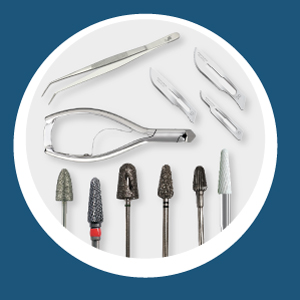
Precise instruments for gentle gestures.
Frequently asked questions
How often should sensation be tested?
According to the person’s risk level and your order’s protocol. Record each result in the file.
Which signs call for a referral?
A wound, redness, warmth, a colour change or a new loss of sensation.
Can corn removers be used on a patient with diabetes?
No, not without medical advice. These products can damage fragile skin that heals poorly.
How should a diabetic patient’s nails be cut?
Straight, never too short, then file the corners. With sterilized instruments and gentle gestures.
Do you supply residences and long-term care homes?
Yes. We deliver to facilities, in single units or by the case.

Do you follow patients with diabetes?
Our team helps you build your kit: monofilaments, skin care and offloading.